
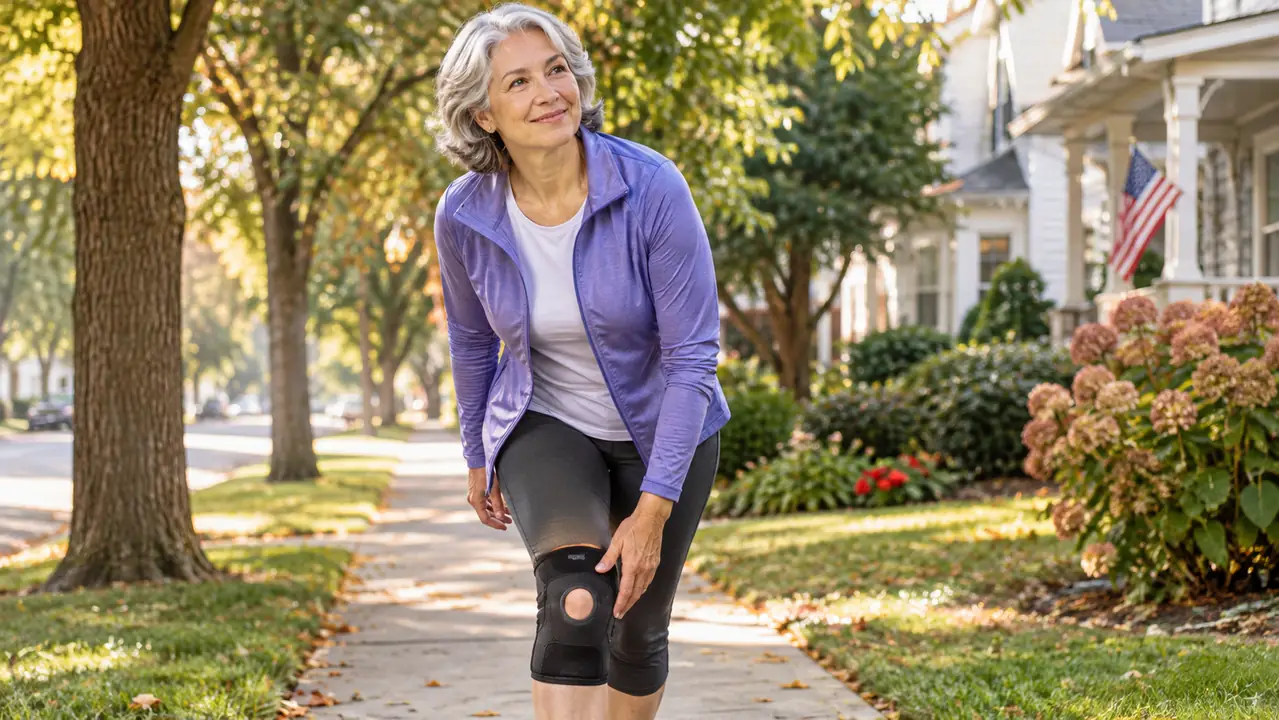
I will be honest with you: I did not want to like the DR. BRACE Elite. Four years of living with achy knees have made me a skeptic. My left knee has mild-to-moderate osteoarthritis, diagnosed about four years ago, and it shows up at the worst moments: on stairs, after long car rides, and first thing in the morning when I swing my legs out of bed. I am a retired school nurse, so I have seen plenty of braces come and go, and my own drawer is full of gadgets that promised more than they delivered. When this one arrived with side stabilizers, gel pads, and a name that sounds like it belongs on a football field, I expected another disappointment.
A few weeks later, I am writing this with a different opinion. Not a cure. I want to say that plainly, because anyone who tells you a brace will fix arthritis is not being straight with you. The ache is still there some mornings, and I still choose the railing on stairs. But the DR. BRACE Elite has become the thing I reach for before a walk, and it has earned that spot by being more honest than its packaging. Here is what nobody tells you about it, the good and the annoying, in the order I learned it.
The Quick Verdict
A sturdy, well-padded knee brace that genuinely steadied my arthritic knee on stairs and long walks, once I got the fit right. Not a cure, and the sizing is fiddly, but it is the most dependable brace I have tried.
Amazon Check Today's Price →The brace I was skeptical about, now worn almost daily
If your knees ache on stairs, after sitting, or on long drives, the DR. BRACE Elite is worth a serious look. It is not a cure, but it is honest support.
Amazon Check Today's Price on Amazon →How I've Used It
I tested the DR. BRACE Elite for six weeks, which feels like the right amount of time to learn a brace's true personality. The first week I wore it only on my neighborhood walks, the ones I do most mornings since I retired. The second week I added the stairs at home, the short flight down to the basement where Ray keeps his tools. By the fourth week I trusted it enough to wear it on a long car ride to Oklahoma City, which is exactly the kind of drive that usually leaves me stiff.
My routine is simple. I put the brace on after breakfast, before my walk, and I take it off when I am done for the day. On Fridays, when I babysit my two grandkids, I wear it the whole afternoon, because chasing a four-year-old involves more squatting than I care to admit. The first time I wore it, I laughed at how it looked in the mirror. It is a serious piece of equipment, not a discreet sleeve. Then I walked to the end of the block and back, and I stopped caring about the mirror.
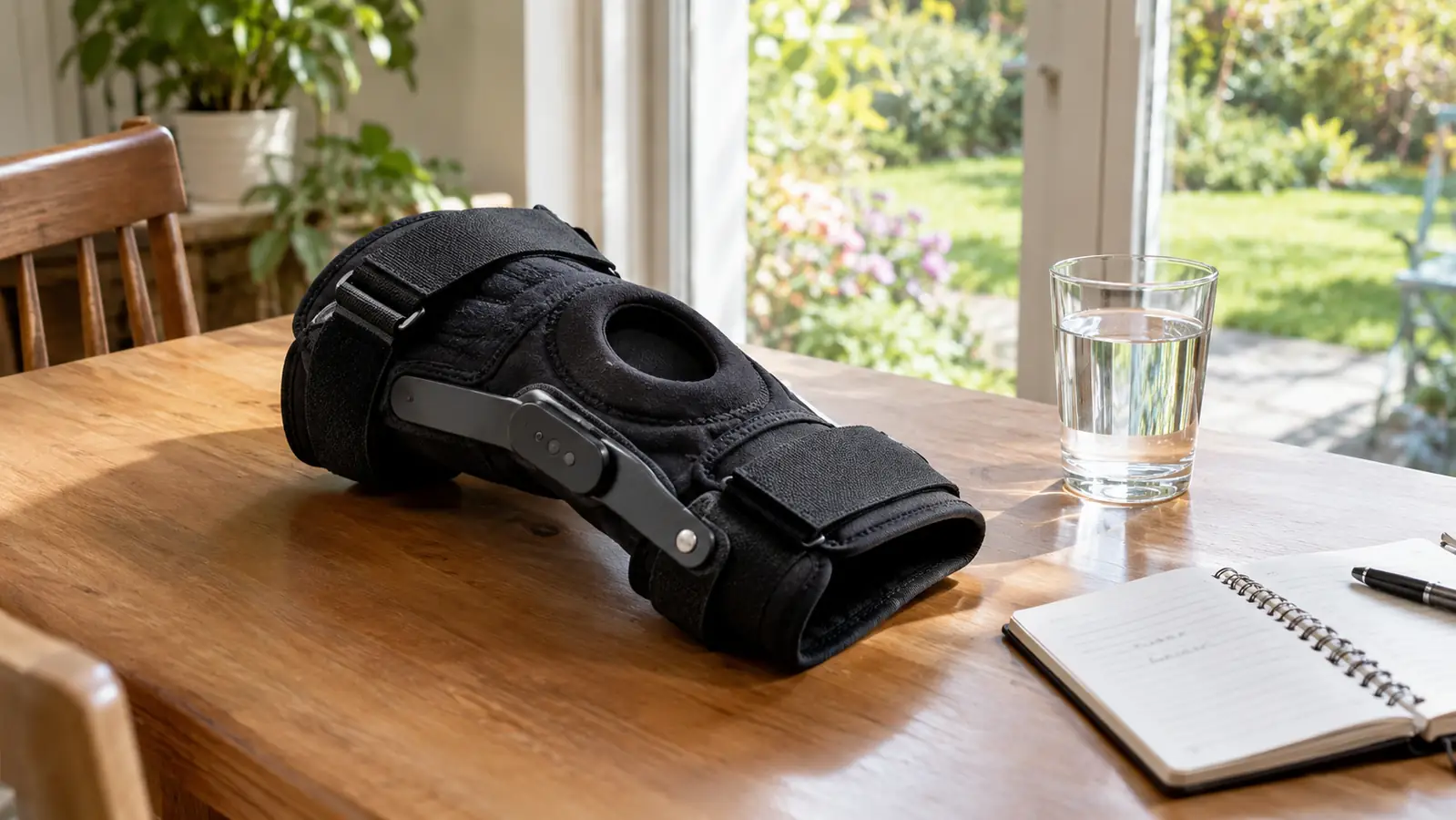
I keep a small notebook in the kitchen, a habit from my nursing days, and I jot down how my knee feels each evening. That notebook is where most of this review comes from. One more thing before I move on: I have one bad knee, the left one, and I wore the brace only on that leg. My right knee is fine and stayed out of the experiment. I did not wear the brace to bed, and I did not wear it every hour of the day. A brace is a tool for activity, not a permanent attachment, and treating it that way is probably why I still like it.
What the DR. BRACE Elite Actually Does
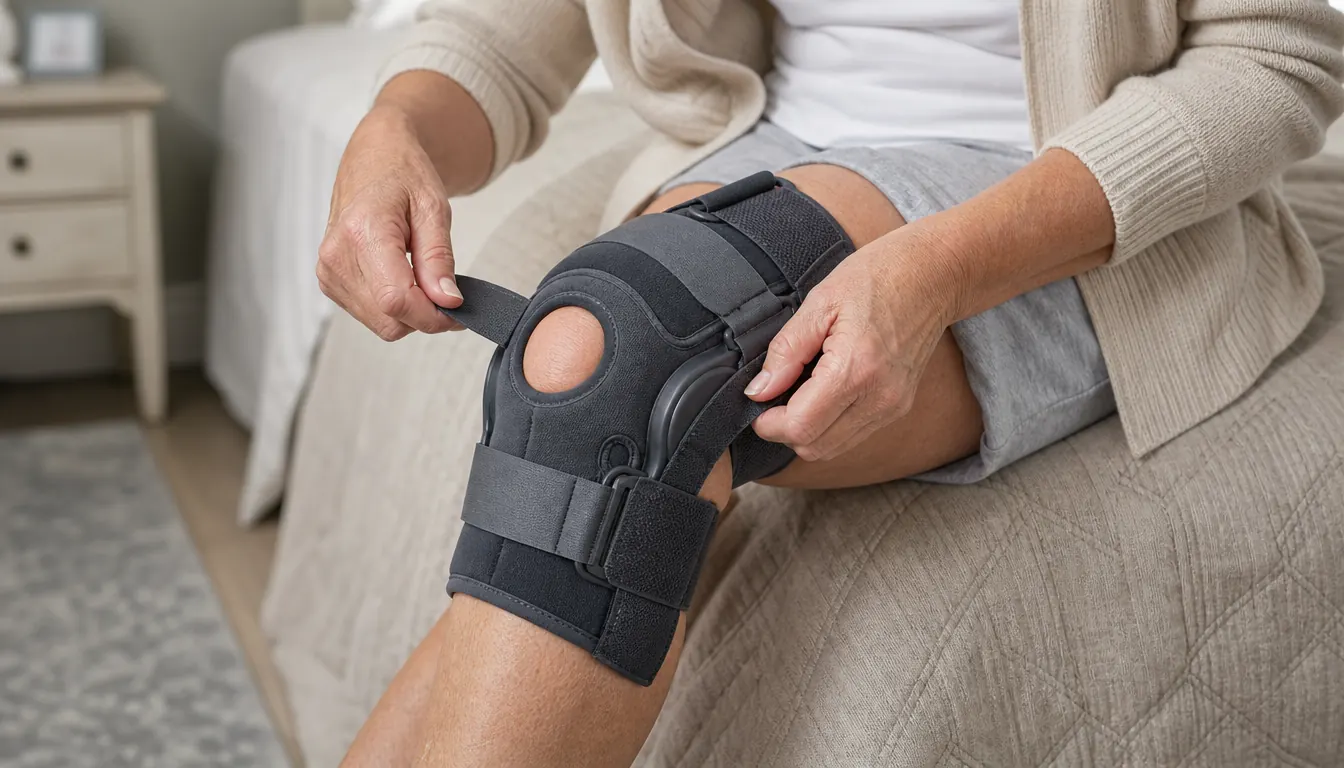
The design is straightforward once you look at it. The brace has rigid supports running along both sides, the side stabilizers in the name, and they are the part that surprised me most. On stairs, where my knee has a habit of feeling wobbly, those stabilizers resist the sideways wobble and give me a steadier step. It is not dramatic. It is the difference between gripping the railing and resting my hand on it. Some mornings I forget I am wearing the brace until I reach the stairs, and then I remember why I put it on.
The other piece is the gel pad that sits around the kneecap. The brace has an opening at the front, and the pad forms a ring around that opening, which keeps the kneecap from drifting and spreads pressure across a wider area. I felt that most on long walks. Without the brace, my knee starts complaining around the half-mile mark. With it, I finished my usual two-mile loop without the familiar ache building in the same way. That is the kind of concrete difference I can put in a notebook and point to.
The straps do the real work of holding everything in place. There are several of them, and they let you adjust the fit in a way a simple compression sleeve cannot. I found myself using different settings from one day to the next. On a long walk I wanted them snug. Around the house I let them sit looser. That is the kind of flexibility you only appreciate after you have owned a brace that only fits one way. It is both the brace's greatest strength and the source of its one real frustration, which brings me to the part nobody puts in the marketing.
What Nobody Tells You: The Fit Is the Whole Game
Here is the honest part. The DR. BRACE only works if it fits, and fitting it takes more patience than the box suggests. The sizing chart wants a measurement around your knee, and that measurement matters. Order too small and the straps dig into the back of your leg. Order too big and the whole brace slides down toward your ankle by the end of a walk. I got it right on the second try, and I am glad I measured twice before ordering.
Even with the right size, the first week is a learning curve. The gel pad wants to sit directly over your kneecap, not above it and not below it, and you will not know you have it wrong until you walk a block and feel the edge of the pad pressing into the wrong spot. The straps also need a few tries. Too loose and the brace rotates. Too tight and it leaves marks. Somewhere in the middle there is a setting that stays put for an entire walk, and finding it is a small victory. Give yourself that week before you decide whether the brace is right for you.
Two more things I wish someone had told me. First, the brace is warm. It is padded and sturdy, which is exactly why it supports well, but on a hot Tulsa afternoon it makes itself known. Second, it is not invisible under clothes. It fits under loose pants fine, but leggings will show every strap. Neither of those is a reason to skip it. They are just the truth, and I would rather read the truth before I buy. The people who post the glowing reviews never mention the warm part, and the people who hate the brace never mention the support it gives. Both sides are telling the truth. It just depends on what you are willing to trade.
I drove to Oklahoma City and got out of the car without the usual first-step stiffness for the first time in months.
Six Weeks In: How It Holds Up
The real test of any brace is not the first week, it is the sixth. The first week everything feels promising because it is new. By the sixth week you know whether the padding has flattened, whether the straps have stretched, and whether the gel pad has wandered off. Here is what my notebook says: the DR. BRACE Elite has held up. The stabilizers still feel rigid. The straps still hold the same setting. The gel pad has not budged from its spot.
The most telling result was the car ride. I drove to Oklahoma City in the middle of the test period, about an hour and a half each way, and I wore the brace the whole time. In the past, a drive like that meant getting out of the car and hobbling the first few steps while my knee loosened up. This time I stood up and walked normally. That is a small thing, but it is exactly the kind of small thing that makes a brace worth keeping.
I should also tell you what it did not do. It did not take away my morning stiffness. My knee is still creaky when I first get up, and I still do my little exercise routine before I trust it with anything serious. The brace is support, not medicine. Understanding that difference is the difference between being satisfied with it and being disappointed by it. I have owned gadgets that promised to fix me, and they all let me down. This one only promised to help, and it kept that promise.
One thing that surprised me in the sixth week is how much I stopped thinking about the brace. In the first week I was always aware of it, adjusting it, checking the mirror. By the sixth week I put it on without thinking, the way I put on my walking shoes. That is the best compliment I can give any piece of gear. The good ones disappear. The bad ones demand attention all day.
Alternatives I Considered
I did not test this brace in a vacuum. Over the past few years I have tried a simple compression sleeve, a wrap with a single strap, and a neoprene sleeve with a hole for the kneecap. The compression sleeve was easy but gave almost no support on stairs. The single-strap wrap helped a little but slid down by the end of my walk. The neoprene sleeve was warmer than the DR. BRACE Elite and did less for the wobbly feeling that bothers me most.
I also talked to my physical therapist about what to look for, and that conversation shaped how I judged the DR. BRACE Elite. She told me to look for support that resists sideways movement, not just compression, and to make sure the kneecap area is not pressed on directly. Those two details are exactly what the side stabilizers and the gel pad address. I am not a doctor and this is not medical advice, so if your knee is bothering you, please talk to someone who has seen it.
Where It Falls Short
No honest review is complete without the complaints, so here are mine. The brace is warm, as I mentioned, and I suspect it will be less pleasant in July than it was in the spring. It is also bulky. I own one pair of loose trousers that hide it completely, and I have learned which of my other pants show it. If you care about that, factor it into your decision.
The sizing process is the biggest hurdle, and I want to say it loudly: measure carefully, and do not be afraid to exchange for a different size. The brace is also not for everyone. If your knee gives out unexpectedly, if it swells, or if you have an injury that needs a doctor's attention, a brace is not the answer. Mine is a support tool for a known, stable problem. Treat it that way and it will treat you fairly.
One more honest note about the straps. In the sixth week, I noticed the top strap needed a slightly tighter pull than it did in the first week. That is normal wear, and it took me all of five seconds to adjust. I mention it because nobody tells you that any brace you wear daily will need small adjustments over time. The DR. BRACE Elite has needed fewer than any I have tried, but it still needed a few.
What I Liked
- Gel pad spreads pressure around the kneecap, which I felt most on stairs
- Side stabilizers give real lateral support, not just compression
- Straps held their setting through six weeks of daily wear
- Feels sturdy, like it will last longer than the cheap sleeves I have tried
- Made a long car ride noticeably easier, which surprised me
Where It Falls Short
- Runs warm, especially on hot days
- Bulky under leggings or fitted pants
- Sizing is fiddly; measure twice and be ready to exchange
- Does not fix morning stiffness, only supports the knee during activity
- Not for unstable, swollen, or recently injured knees
Who This Is For
I would hand the DR. BRACE Elite to someone whose knee aches the way mine does: a familiar, stable ache that shows up on stairs, after sitting too long, or on long drives, and that gets better with a little support. It is for people who walk, garden, chase grandchildren, and refuse to give those things up just because a joint complains. It is for people who are willing to spend one patient week learning the straps, because that week pays off in the months after.
Who Should Skip It
I would steer someone away from this brace if their knee is genuinely unstable, if it locks or gives out, or if there is swelling that comes and goes. Those are signs that a doctor or physical therapist should be involved, and no brace from a box is a substitute for that. I would also skip it if you want something light and invisible under your clothes, because this is a sturdy piece of equipment, not a fashion accessory. And if you are not willing to fiddle with the fit, a simple sleeve might frustrate you less, even if it supports you less.
The brace I reach for on stairs, walks, and long drives
If your knees ache the way mine did, the DR. BRACE Elite is worth a try. Measure carefully, give it a week, and see if your stairs feel steadier.
Amazon Check Today's Price on Amazon →